
Of the six main categories of tea, four are commonly associated with a specific color. There’s black and green, of course, and there’s also white, a variety that has become more popular lately. Yellow tea is lightly processed and is more or less produced along similar lines as green tea. Yellow tea is not nearly so well-known as the other types. The two types of tea that are not typically associated with a color are puerh and oolong, though the latter may occasionally be referred to as blue tea.
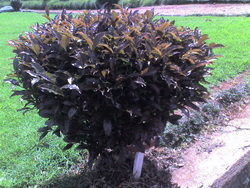
Most people are probably aware of at least two or three of the previously mentioned “colored” teas, but how many of us have ever heard of purple tea? Not many so far, but if tea growers in Africa have anything to say about it that’s about to change. Purple tea, or TRFK 306/1, to use the not so catchy name currently in use, is a relatively new tea variety, although it has been in development for about twenty-five years. It originated in the African country of Kenya, which is currently one of the world’s leading producers of black tea.
Purple tea, according to the Tea Research Foundation of Kenya, which was instrumental in developing it, is useful for a number of reasons, most notable its high anthocyanin content. According to the Foundation, anthocyanins are “powerful antioxidants and have health enhancing properties.”
This new type of tea was in development for almost a quarter of a century but it was only submitted to the Kenyan government for approval in early 2011 and was approved for commercial production in August of this year. One of the substantial benefits for Kenya’s tea growers is that the purple variety is expected to bring financial returns of up to four times as much as black tea.
For more information about purple tea refer to this article at the Tea Research Foundation’s web site.
© Online Stores, Inc., and The English Tea Store Blog, 2009-2014. Unauthorized use and/or duplication of this material without express and written permission from this article’s author and/or the blog’s owner is strictly prohibited. Excerpts and links may be used, provided that full and clear credit is given to Online Stores, Inc., and The English Tea Store Blog with appropriate and specific direction to the original content.


 Tea Blog
Leave a reply to A.C. Cargill Cancel reply