
What Is “Broken Tea”—And Why Does It Exist?
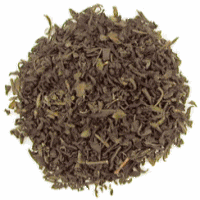
“Broken tea” is a term many tea drinkers encounter only after diving deeper into the world of tea.
Before that, tea is often just… small flakes in a bag—something that vaguely resembles a plant, with little thought given to its origin.
But once you discover whole leaf tea, a natural question arises:
Why are these beautiful leaves broken into tiny pieces at all?
The Obvious Answer: Tea Bags
The first and most straightforward explanation is practicality.
Whole tea leaves simply do not fit well into traditional tea bags. Broken tea, however:
- Fits easily into small bags
- Steeps quickly
- Works well for mass production
For a long time, the popularity of tea bags made this approach almost unavoidable in mainstream tea markets.
Blending and Consistency
Another key reason for breaking tea leaves is blending.
Broken tea is easier to:
- Mix with teas from different regions
- Create consistent flavor profiles
- Standardize large-scale production
Whole leaf teas, with their variation in shape, size, and density, are much harder to blend uniformly.
The Quality Question
Broken tea is often associated with lower quality—but the reality is a bit more nuanced.
In many cases, broken tea results from:
- Mechanical harvesting
- Bulk processing methods
- Use of smaller leaf grades or leftovers
This can lead to a reduction in complexity and subtlety compared to whole leaf tea.
However, this does not automatically make all broken tea “bad.”
The Trade-Off: Convenience vs. Complexity
Broken tea offers certain advantages:
- Faster infusion: smaller particles release flavor quickly
- Stronger taste: often produces a bold, immediate brew
- Convenience: ideal for quick, everyday tea preparation
On the other hand, whole leaf tea typically provides:
- More nuanced flavors
- Greater depth and complexity
- Multiple infusions from the same leaves
Why High-End Tea Isn’t Broken
When you consider how high-quality tea is produced, breaking the leaves makes little sense.
Premium tea often involves:
- Careful cultivation over years
- Selective hand-picking (often just the top leaves and bud)
- Detailed processing under controlled conditions
After all that effort, breaking the leaves would destroy much of the craftsmanship and value built into the tea.
So… Why Break Tea Leaves?
To summarize, tea is typically broken because it:
- Fits easily into tea bags
- Allows for efficient blending
- Supports large-scale, low-cost production
These goals are practical—but they come with trade-offs in quality and experience.
Final Thoughts
Broken tea and whole leaf tea serve different purposes.
If convenience and consistency are your priorities, broken tea has its place. But if you’re seeking depth, complexity, and a richer tea experience, whole leaf tea is hard to beat.
Ultimately, understanding the difference helps you make more informed—and more enjoyable—choices.
See more of Thomas Kasper’s articles here.
© Online Stores, Inc., and The English Tea Store Blog. Unauthorized use is prohibited. Excerpts allowed with proper credit.



 Tea Blog
Leave a comment