
If you keep close tabs on tea-related news (guilty), you’ll notice that it’s rare to go a day without seeing a report highlighting the potential
health benefits associated with tea and its various compounds
.
Far less common are reports that point to possible downsides. Recently, however, conflicting research has emerged suggesting that tea may both help and potentially harm in relation to prostate cancer.
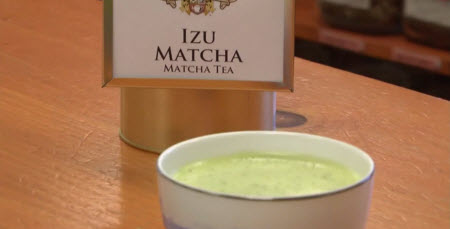
Izu Matcha (Photo source: The English Tea Store)
So how should we interpret this? It’s not entirely clear. As discussed in
this earlier overview of research on green tea and prostate cancer risk
,
prostate cancer remains a major health concern, affecting a significant portion of the male population.
Some recent studies have suggested that heavy tea consumption may be associated with increased risk. For example, a long-term study conducted by researchers at the University of Glasgow followed more than 6,000 men over several decades and found that those who consumed seven or more cups of tea per day had a higher reported incidence of prostate cancer.
However, the researchers noted important limitations, including the possibility that the observed relationship may be linked to longer lifespan rather than a direct causal effect of tea itself.
For additional context, see
this report summarizing the Glasgow University study and its findings on tea consumption and prostate cancer risk
.
On the other hand, separate research points to potential benefits. A study conducted by researchers at the University of Missouri indicated that compounds found in green tea could play a role in targeting prostate cancer cells.
In particular, the compound epigallocatechin gallate (EGCG), which is abundant in green tea, has been widely studied for its potential antioxidant and anti-cancer properties.
More details on this line of research can be found in
this report on combining green tea compounds with gold particles to target prostate cancer cells
.
Disclaimer: This content is for informational purposes only and should not be considered medical advice. Please consult a qualified healthcare professional for guidance specific to your situation.
© Online Stores, Inc., and The English Tea Store Blog. Unauthorized use is prohibited. Excerpts allowed with proper credit.


 Tea Blog
Leave a comment