

Tea lovers, take heart: there’s a mystery novel that transports you straight to a tea garden in the Himalayan region near Darjeeling, India.
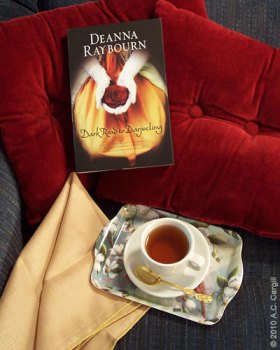
The book is Dark Road to Darjeeling by Deanna Raybourn. Be sure to brew yourself a proper cup of Darjeeling before diving in—this novel pairs beautifully with tea.
This book is the fourth in Raybourn’s Lady Julia Grey series. If you haven’t read the earlier installments, it’s worth starting there to avoid spoilers. Unfortunately, I didn’t have that option, so I jumped in mid-series.
At first, the story felt a bit slow and somewhat contrived—likely due to the need to bring readers up to speed. However, as the plot progresses, the pace picks up. Raybourn skillfully leads readers down false paths before redirecting them, keeping the mystery engaging and unpredictable.
Just when I thought I had everything figured out…
By the time the central mystery begins to unfold, new layers emerge—another effective technique for holding the reader’s interest. Along the way, the author touches on themes such as the importance of purpose in life and the frustrations faced by younger members of aristocratic families who are not expected to pursue careers.
Raybourn also demonstrates a solid understanding of tea. She references flowering teas, oolongs, and uses terminology like “flush” correctly. Her descriptions of the Darjeeling landscape are vivid, capturing both the beauty of the region and the skill of the tea workers.
One particularly compelling element is the transformation of the valley—from a place once filled with poisonous plants into a thriving tea estate.
However, not everything worked for me. Lady Julia Grey herself felt somewhat immature and overly impulsive. At times, her behavior became tiresome, and her interactions with her husband, Nicholas Brisbane, occasionally veered into melodrama.
The romantic elements felt more suited to a different genre, and at times the repeated language within those scenes became distracting. I found myself occasionally amused where I suspect the author intended seriousness—and at other points, simply frustrated.
The portrayal of the March family also lacks the sense of cohesion found in other literary families (a comparison to Little Women inevitably comes to mind). Additionally, the depiction of Americans as brash and overbearing felt somewhat clichéd.
That said, the immersive setting and the strength of the mystery itself help offset these shortcomings. The tea garden atmosphere is compelling, and the twists are effective—I did not correctly guess the main villain before the reveal.
There are both surprises and expected elements (appropriate to the 1889 setting), but overall the story remains engaging and enjoyable.
You may find yourself quickly drawn into the narrative—finishing half the book before you realize it, and the rest soon after.
Just remember: brew a fresh cuppa first.
Disclaimer: I received a copy of this book from a marketing firm for review.
Be sure to check out A.C.’s blog, Tea Time with A.C. Cargill!



 Tea Blog
Leave a comment