
Like it or not, it’s probably safe to say that the tea bag is here to stay. The consensus among some tea lovers has long been that little good can come from a tea bag. That may once have been true, when tea bags were often filled with lower-quality dust and fannings, but in recent decades they have undergone something of a renaissance.
As noted in this look at historical tea gadgets and early brewing devices, various tools for steeping loose tea—such as tea balls, strainers, and infusers—appear in patent records dating back to the nineteenth century.
The commonly told origin story of the tea bag suggests that in the early twentieth century, tea merchant Thomas Sullivan distributed samples in small cloth bags, which customers then steeped directly in hot water. While patent records do not clearly confirm Sullivan’s role, no widely accepted alternative explanation has emerged.
One of the earliest documented developments in tea bag design appears in this 1928 patent for an individual tea bag created by inventor William Abbott, which represents one of the first formal attempts to standardize the concept.
About 25 years later, Lipton introduced an improved design. In 1952, the company released its “flo-thru” tea bag, which allowed better water circulation and more efficient extraction of flavor during brewing.
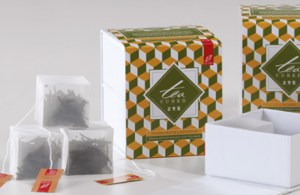
Cube-shaped tea bag
The exact origins of pyramid and other “gourmet” tea bags are less clear, though some sources trace their development to Japan in the early 1980s. The concept gained wider recognition in the mid-1990s when major brands such as Lipton and PG Tips introduced their own versions.
Today, these larger tea bags allow for higher-quality leaves and improved steeping. One more recent variation is the cube-shaped tea bag introduced by LPV International. According to the company, Tea Cubed, a cube-shaped tea bag design with space for whole leaf tea expansion provides more room for water to circulate around the leaves, enhancing flavor extraction.
While firsthand experience with this product may vary, a reviewer from The Sun offered a positive assessment. For a detailed review, see this article evaluating cube-shaped tea bags and their brewing performance.
See also:
Examining whether tea bags deserve their reputation among tea enthusiasts
Exploring whether flavor differences come from tea leaves or tea bag materials
© Online Stores, Inc., and The English Tea Store Blog. Unauthorized use is prohibited. Excerpts allowed with proper credit.



 Tea Blog
Leave a comment